Last updated on March 22, 2026 at 04:56 pm
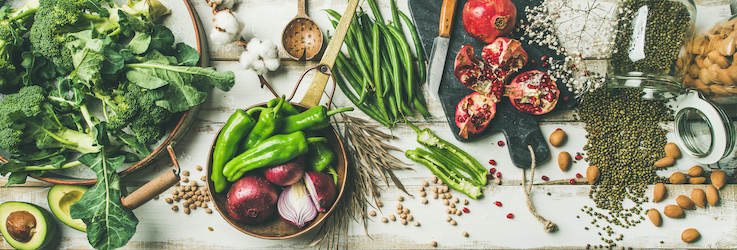
If you’re new here, this is the right place to start.
This guide is the foundation of everything on this site — and everything I’ve built the Eat Healthier in 21 Days Challenge around. It covers what a whole-foods, plant-based diet actually means, why the science behind it is so compelling, what to eat, what to be mindful of, and — most importantly — how to approach it in a way that fits real life rather than fighting against it.
I want to be clear about one thing from the start: this is not a vegan manifesto. The “almost” in almostplantbased is deliberate. What I believe — and what the research consistently supports — is that whole foods are the foundation, and that a diet built predominantly around plants, with animal products chosen carefully and consumed mindfully, is one of the most powerful things you can do for your long-term health.
You don’t have to be perfect. You just have to be intentional. Let’s start there.
What is a whole-foods, plant-based diet?
A plant-based diet doesn’t have one fixed definition — and that’s actually fine, because it means there’s room for it to work for different people in different ways. At its core, it means eating more foods that come from plants and fewer foods that are heavily processed or predominantly animal-based.
The eating styles that fall under the plant-based umbrella include:
- Flexitarian — mostly plant-based, but includes meat, fish, or dairy occasionally
- Pescatarian — plant-based plus seafood
- Vegetarian — excludes meat and fish, but may include eggs and dairy
- Vegan — excludes all animal products
almostplantbased sits closest to flexitarian — and that’s entirely intentional. I eat yoghurt (homemade or from a local producer I trust), occasionally fish, and I don’t believe in removing entire food groups out of ideology. What I do believe is that the quality and origin of what you eat matters enormously — and that whole, minimally processed foods should make up the vast majority of your plate, whatever your approach.
The key distinction that changes everything is the word “whole.”
What are whole foods — and why does it matter?
Whole foods are foods in or close to their natural state. They haven’t been heavily processed, stripped of nutrients, or loaded with preservatives, artificial flavourings, stabilisers, or added sugars. They look like something that grew somewhere.
Corn on the cob is a whole food. Corn flakes are not. Rolled oats are a whole food. Most commercial granola bars are not. Fresh tomatoes are a whole food. Ketchup with added sugar and thickeners is not.
This matters because processing doesn’t just change what a food looks like — it changes what it does in your body. Whole foods are rich in fibre, vitamins, minerals, and phytonutrients. Heavily processed versions of the same ingredients are often stripped of most of that value and replaced with things your body doesn’t need.
A practical tip for reading labels
When buying packaged food — and we all buy some — here’s how I read a label:
- The shorter the ingredient list, the better
- If you can’t picture the ingredient growing somewhere, pause and consider why it’s there
- The first ingredient listed is the most abundant — so if sugar or a refined oil appears first, that tells you something important
- Check the percentage of the key ingredient. If you’re buying beetroot hummus, chickpeas should be the dominant ingredient — not fillers or starch
This habit alone — just reading labels properly — changes your shopping in ways that compound over time.
Why eat this way? What the science says
The evidence base for whole-foods, plant-based eating is one of the most robust in nutritional science. Studies consistently show that choosing whole, plant-forward foods is associated with meaningfully lower risk of the chronic diseases that are overwhelming modern healthcare. [1]
Specifically, whole-foods, plant-based diets have been associated with:
- Supporting healthy weight management [3]
- Lowering the risk of death from heart disease [4]
- Reducing dependence on certain medications [5]
- Decreasing blood pressure [6]
- Improving blood lipid and cholesterol levels [7]
- Improving blood glucose regulation [8]
- Potentially reversing type 2 diabetes [9]
- Potentially reversing coronary artery disease [10]
- Reducing cancer risk [11]
These aren’t fringe findings. They are consistent across decades of large-scale research. The mechanisms are well understood too — more fibre means better gut health, better satiety, lower cholesterol. More potassium from vegetables means lower blood pressure. Fewer processed foods means less sodium, less systemic inflammation, better blood sugar control.
I found this body of evidence genuinely life-changing when I studied Nutrition Science at Stanford. Not because any of it was shocking — but because it made the connection between everyday food choices and long-term health outcomes so clear and so actionable. This isn’t abstract science. It’s something you can act on at your next meal.
What to eat: the whole-foods plate
A simple framework that works well as a starting point:
- Half your plate: colourful vegetables
- A quarter of your plate: plant-based protein — legumes, tofu, tempeh, nuts, seeds
- A quarter of your plate: whole grains or starchy vegetables
This isn’t a rigid rule — it’s a useful visual guide. Here’s what belongs in each category:
Vegetables and fruit
Eat these freely and vary them as much as possible. Colour variety is a practical proxy for nutrient variety — different colours signal different vitamins, minerals, and antioxidants. Dark leafy greens like spinach, kale, broccoli, and bok choy are particularly valuable and worth including several times a week.
Fresh is ideal, but frozen vegetables retain their nutritional value extremely well and are a perfectly good choice — especially for out-of-season produce. Keeping a well-stocked freezer is one of the most practical things you can do for consistent whole food eating.
Whole grains
This is where I could talk for hours. Whole grains — quinoa, freekeh, oats, brown rice, barley, millet, buckwheat, teff, bulgur — are one of the most undervalued food groups in modern eating. I batch cook grains every Sunday and Wednesday so there’s always something ready in the fridge. A scoop of cooked quinoa or freekeh turns a simple vegetable dish into a complete, sustaining meal in seconds.
Quinoa is my go-to for protein — it contains all nine essential amino acids. Freekeh is my weeknight favourite for its smoky flavour and exceptional fibre content. And puffed quinoa and amaranth go into our homemade granola every week — the kids love it.
Read more: 13 Healthy Whole Grains to Eat — Nutrition Compared
Legumes
Chickpeas, lentils, black beans, white beans, edamame, peas — these are the workhorses of plant-based cooking. High in fibre, protein, iron, zinc, calcium, and selenium. They’re filling, affordable, and extraordinarily versatile. I always have several varieties in the cupboard, both dried and canned (no-added-salt where possible).
Read more: The Healthiest Beans and Legumes Compared
Nuts and seeds
Walnuts, almonds, cashews, pistachios, Brazil nuts — a small daily handful (around 30g) delivers healthy fats, protein, fibre, and a concentrated dose of minerals. Brazil nuts in particular are one of the best food sources of selenium, which supports thyroid health and immunity. Just make sure they’re unsalted.
Seeds — chia, flax, pumpkin, sunflower, hemp — are equally powerful. I add chia seeds to almost everything: overnight in homemade almond milk with a splash of maple syrup for a pudding, stirred into yoghurt, baked into Sunday cakes. They’re one of the best plant sources of omega-3 and protein combined.
Read more: Chia Seeds: Benefits, Nutrition & How to Use Them Every Day
Plant-based milk
I make my own almond milk — it’s simpler than it sounds and tastes incomparably better than anything from a carton. For anyone eating little dairy, a good plant milk fortified with vitamin D, calcium, and B12 is worth keeping in the fridge. Just read the label and avoid versions with unnecessary additives or added sugar.
Read more: A Guide to Plant-Based Milks
On animal products: choose with care, not with guilt
This is where almostplantbased differs from a strict plant-based or vegan approach — and I think it’s an important difference worth being honest about.
I don’t believe the goal should be to eliminate all animal products. I believe the goal should be to choose animal products with great care, invest the time to understand their origin and composition, and consume them mindfully rather than by default.
What does that look like in practice?
- Dairy: I eat yoghurt regularly — but I make it myself, or I buy it from a local producer whose practices I know and trust. A good live yoghurt or skyr, high in protein and with active cultures for gut health, is a very different thing from a heavily sweetened, commercially produced dairy product. Know what you’re buying.
- Meat: If you eat meat, the origin matters. Grass-fed, pasture-raised, locally sourced meat from animals raised well is nutritionally and ethically a different product from factory-farmed processed meat. Eat less of it, and eat better quality when you do.
- Fish: A good source of omega-3 and protein. Wild-caught where possible, and mindful of sustainability. Worth including if it’s part of your eating pattern.
- Eggs: Free-range, from a source you trust. Nutritionally valuable, particularly for protein and B12.
The foods genuinely worth reducing significantly — for health reasons, not ideology — are processed meats (ham, salami, bacon, sausages), which are high in sodium and saturated fat, and heavily processed dairy products like most commercial cheeses and flavoured yoghurts, which are high in sodium and added sugars. These are categorically different from high-quality, minimally processed animal foods.
What to keep to a minimum
Ultra-processed foods
Packaged snacks, ready meals, commercial baked goods, fast food — these are engineered for palatability, not nutrition. They tend to be high in refined fats, sodium, and added sugar, and low in the fibre and micronutrients your body actually needs. The goal isn’t to never eat them — it’s to make them the exception rather than the default.
Refined grains
White bread, white pasta, white rice, most commercial breakfast cereals — these are stripped of fibre and most of their nutritional value during processing. They cause rapid blood sugar spikes followed by energy crashes. Swapping them for whole grain alternatives is one of the simplest and most impactful dietary changes you can make.
Artificial sweeteners
Often marketed as a healthier alternative to sugar, but they are not part of a whole-food approach. Research suggests they can increase sugar cravings over time. Where sweetness is needed — in baking, in drinks — I use raw honey, maple syrup, or dates. Real sweeteners, in real amounts.
Processed meats
Ham, bacon, salami, sausages, deli meats — high in sodium, saturated fat, and often preservatives. Worth reducing significantly regardless of your overall dietary approach.
Key nutrients to pay attention to
A well-planned whole-foods diet contains almost everything your body needs. But there are a few nutrients worth being intentional about, particularly if you’re eating little or no animal products.
Vitamin D
Primarily synthesised through sunlight exposure — which makes deficiency extremely common in northern climates, particularly through autumn and winter. Food sources include eggs, oily fish, and some fortified products. If you get limited sun exposure, a vitamin D supplement is one of the most well-supported nutritional recommendations across all dietary patterns.
Vitamin B12
Found almost exclusively in animal products. If you’re eating a predominantly plant-based diet with minimal animal foods, B12 supplementation or fortified foods (plant milks, nutritional yeast, some cereals) is essential. The recommended daily amount for adults is around 4μg. [14] Ask your doctor to check your levels — it’s a simple blood test.
Protein
Very achievable on a plant-forward diet with a little intentionality. Legumes, tofu, tempeh, quinoa, seeds, nuts, and whole grains all contribute. The key is variety — eating a range of plant protein sources throughout the day covers all the essential amino acids your body needs. [16]
Note that plant protein is slightly less bioavailable than animal protein, so requirements are around 10–20% higher for predominantly plant-based eaters. In practice, most people eating a varied wholefood diet meet their needs without tracking.
Omega-3 fatty acids
Found in oily fish (the most bioavailable form), and in plant foods as ALA — walnuts, flaxseed, chia seeds, hemp seeds. The plant form requires conversion in the body, which is why I prioritise chia seeds and walnuts daily. If you eat no fish, an algae-based omega-3 supplement is worth considering.
Read more: Plant-Based Sources of Omega-3
Calcium
If you eat dairy regularly, you’re likely covered. If not, good plant sources include tofu, fortified plant milk, dark leafy greens, almonds, white beans, and chia seeds. Soaking nuts, seeds, and grains before eating helps reduce phytates that can inhibit absorption. Read more about plant-based calcium sources here.
Iron and zinc
Found in legumes, tofu, pumpkin seeds, whole grains, and dark leafy greens. Absorption is enhanced by eating vitamin C-rich foods alongside iron-rich foods — a squeeze of lemon on your lentil soup, for example, makes a genuine difference.
How to actually start — without overhauling everything at once
The biggest mistake people make is trying to change everything simultaneously. That’s a fast route to overwhelm and giving up. Here’s what I’d suggest instead:
Week one: Focus on adding, not removing. Add a portion of legumes to two meals this week. Add a handful of seeds to your breakfast. Batch cook one grain on Sunday and use it across three meals. Notice how you feel.
Week two: Look at what you’re buying in packets. Apply the label-reading habit. Start swapping one or two processed staples for whole food alternatives — packaged bread for whole grain, commercial yoghurt for a good live version, flavoured cereals for oats or homemade granola.
Week three: Build a rhythm. What can you make on Sunday that sets the week up? For me it’s batch-cooking grains, making a jar of kombucha, prepping chia pudding, and baking something for the kids’ lunch boxes. That rhythm makes the rest of the week effortless.
Small, consistent changes compound into something genuinely transformative over time. You don’t need to be perfect — you need to be consistent enough, most of the time, in the right direction.
Want a structured programme to guide you through it?
The Eat Healthier in 21 Days Challenge is a day-by-day programme built around everything in this guide — with meal plans, 200+ recipes, downloadable trackers, and the science explained clearly and accessibly. You can start at any time and go at your own pace.
If you’re an athlete looking to optimise performance and body composition on a plant-forward diet, the Plant-Based Athlete course covers sports nutrition specifically.
And if you want to keep reading, here are the best places to go next:
- 13 Healthy Whole Grains to Eat — Nutrition Compared
- Chia Seeds: Benefits, Nutrition & How to Use Them Every Day
- How to Lose Weight Fast — and Keep It Off
- High Blood Pressure & Nutrition: What You Can Do Today
- Psoriasis: How Food Can Help Manage Your Symptoms
The information in this article is for general educational purposes and does not replace medical or nutritional advice. If you have a health condition or specific dietary requirements, please work with a qualified health professional.