
Last updated on March 29, 2026 at 12:08 am
Weight loss advice is everywhere — and most of it is contradictory, short-lived, or simply unsustainable. Cut carbs. Count every calorie. Try this shake. Try that programme. It’s exhausting.
What the research actually shows — consistently, across decades of studies — is that the people who lose weight and keep it off share one thing in common: they eat more whole, plant-based foods and fewer processed ones. Not because they followed a rigid diet. Because they changed the quality of what they ate, and everything else followed.
That’s the foundation of everything at almostplantbased — and it’s the approach behind the Eat Healthier in 21 Days Challenge. Not a fad. Not a quick fix. A genuine shift in how you eat that produces real, lasting results.
What Is a Plant-Based Diet?
Plant-based eating is more of a direction than a strict set of rules. It means putting whole plant foods at the centre of your plate — vegetables, fruits, legumes, whole grains, nuts, and seeds — and reducing processed foods and animal products, to whatever degree works for you personally.
Unlike vegan or vegetarian diets, nothing is technically forbidden. The focus is on quality and proportion rather than rigid exclusion. I eat yoghurt. I eat fish occasionally. I eat eggs from a good source. What I don’t eat much of is anything that comes in a packet with a long ingredient list — because that, more than any specific food group, is what drives weight gain.
The “almost” in almostplantbased is deliberate. This approach works precisely because it’s flexible enough to sustain. A diet you can maintain for life will always outperform a perfect diet you abandon after three weeks.
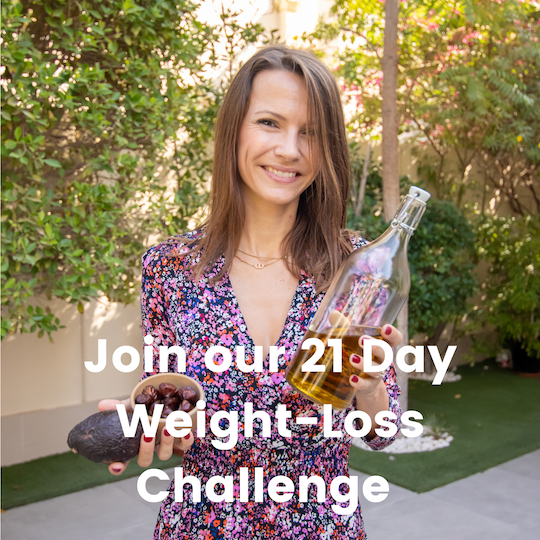
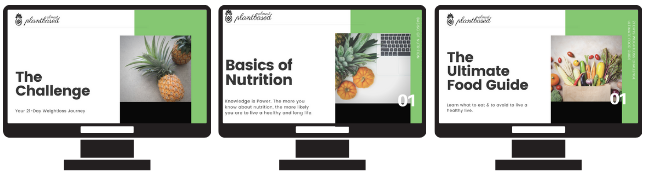
Our courses include everything you need to know about the best foods to eat, what to reduce, and how to build a healthy and balanced life around real food:
How Does a Plant-Based Diet Help You Lose Weight?
There are several well-understood mechanisms — and they work together rather than in isolation.
Globally, obesity rates have reached concerning levels, with the Western world particularly affected. Research consistently shows that lifestyle and dietary changes are among the most effective tools for addressing this. [1]
Plant-based diets are beneficial for weight loss because vegetables and whole plant foods are packed with nutrients while being naturally lower in calorie density. This means you can eat a genuinely satisfying volume of food — a full, colourful plate — while consuming far fewer calories than an equivalent plate of processed or heavily animal-based foods. You feel full. The calories take care of themselves. Read more: Understanding calories for weight loss
High Fibre Foods
Plant-based diets are exceptionally high in fibre — found abundantly in fruits, vegetables, legumes, and whole grains. Fibre slows digestion, stabilises blood sugar, feeds beneficial gut bacteria, and promotes a lasting sense of fullness that refined carbohydrates and processed foods simply cannot match. A plate full of vegetables and legumes will keep you satisfied for hours at a fraction of the calories of a processed equivalent.
Replaces Processed Foods with Whole Plant-Based Foods
Processed foods are engineered to make you eat more — they’re designed to override your body’s natural fullness signals. When you replace them with whole plant foods, you remove that mechanism entirely. Your appetite self-regulates in a way it simply can’t when ultra-processed food is the default. Replacing foods high in refined sugar and empty carbohydrates with plant-based whole food alternatives dramatically reduces calorie intake — without hunger, without tracking, without effort.
Studies on Plant-Based Diets and Weight Loss
A study comparing plant-based diets to a control group found that participants following a plant-based approach had significantly lower BMI at both 6 and 12 months. [2] A separate analysis of 12 studies concluded that plant-based diets were significantly more effective for weight loss than other dietary approaches. [3]
In the 21-Day Challenge, Joost lost 8.5kg in three weeks alongside gym sessions. Mathilde lost 4kg postpartum in 21 days with minimal exercise. Real people, real food, real results. These aren’t outliers — they’re what happens when you change the quality of what you eat. Plant-based diets have also been shown to reduce the risk of diabetes and certain cancers.
Benefits of a Plant-Based Diet
Weight loss is often the first thing people notice — but it’s rarely the only thing that changes.
Reduces the Risk of Heart Disease
A plant-based diet focuses on natural, whole foods high in nutrients and low in refined sugars and saturated fat. A study across multiple communities found that healthy plant-based diets were associated with significantly lower risk of both developing and dying from heart disease. [4] Read more: Nutrition and Heart Disease
Decreases the Risk of Developing Type 2 Diabetes
Plant-based diets reduce blood sugar spikes by replacing refined sugars and carbohydrates with fibre-rich whole foods that release energy slowly. A Harvard study found that plant-based eating significantly decreased the risk of developing type 2 diabetes [6], and another study found a 50% reduction in diabetes risk among plant-based eaters alongside a lower BMI. [7] Read more: Plant-Based Diet and Diabetes
May Reduce the Risk of Some Cancers
Research has linked high meat consumption to increased risk of certain cancers, while high intake of fruits, vegetables, fibre, and antioxidants has been associated with reduced cancer risk. [8] Read more: Plant-Based Diet and Cancer Risk
Decreases Environmental Impact
A shift towards plant-based eating has been estimated to reduce greenhouse gas emissions by up to 70–80% compared to animal-based diets, and could reduce global water consumption by 50%. [9] What’s good for your body turns out to be good for the planet too.
Which Plant-Based Foods Should You Eat for Weight Loss?
Knowing the benefits is one thing — putting them into practice is another. Here’s what to build your meals around, and what to reduce. For a complete overview with day-by-day guidance, access the Eat Healthier in 21 Days programme.
Foods to Eat
- Fruits — apples, bananas, blueberries, oranges, and any seasonal fruit
- Vegetables — broccoli, spinach, peppers, aubergine, courgette, leafy greens
- Whole grains — brown rice, oats, quinoa, freekeh, barley, buckwheat. Read more: 13 Healthy Whole Grains Compared
- Legumes — chickpeas, lentils, black beans, white beans. Read more: The 11 Healthiest Beans and Legumes
- Healthy fats — avocado, extra virgin olive oil, walnuts, flaxseed. Read more: Plant-Based Fats Guide
- Omega-3 rich foods — chia seeds, walnuts, hemp seeds, flaxseed. Read more: Plant-Based Omega-3 Sources
- Plant-based protein — tofu and tempeh are excellent alternatives to meat as the centrepiece of a meal
Foods to Reduce
- Ultra-processed foods — fast food, packaged snacks, ready meals, commercial baked goods
- Sugary drinks — sodas, commercial fruit juices, sweetened coffees
- Refined grains — white bread, white pasta, white rice, most commercial breakfast cereals
- Processed meats — ham, bacon, salami, sausages
On animal products: I don’t recommend eliminating them entirely unless that’s your personal choice. I do recommend choosing them carefully — quality and origin matter — and making whole plant foods the foundation of every meal rather than the side dish. If you do eat meat, fish, or dairy, keep them as a complement rather than the main event.
Plant-Based Diet Meal Plan for Weight Loss
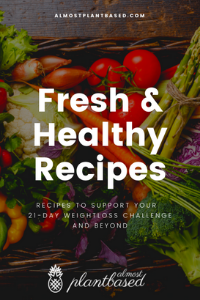
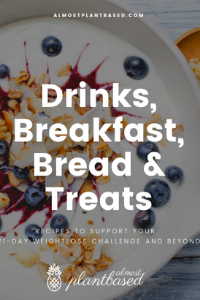
Here’s a full week of practical, whole food meals to get you started. These are the kinds of meals I make regularly — built around ingredients that batch well and come together quickly on a weeknight. More than 200 calorie-labelled recipes are available in the 21-Day Plan.
Monday
- Breakfast: Overnight oats with chia seeds, almond milk, and blueberries
- Lunch: Kale salad with roasted chickpeas and tahini dressing
- Dinner: Black bean and vegetable bowl with freekeh
Tuesday
- Breakfast: Berry smoothie with coconut milk and a tablespoon of chia seeds
- Lunch: Red lentil soup with whole grain bread
- Dinner: Aubergine and tomato bake with quinoa
Wednesday
- Breakfast: Oats with coconut milk, blueberries, and pumpkin seeds
- Lunch: Brown rice and vegetable sushi bowl
- Dinner: Vegetable pizza with a cauliflower base
Thursday
- Breakfast: Good live yoghurt with berries and walnuts
- Lunch: Quinoa and roasted vegetable salad
- Dinner: Chickpea and vegetable curry with brown rice
Friday
- Breakfast: Overnight oats with banana, walnuts, and maple syrup
- Lunch: Baked sweet potato with black beans and guacamole
- Dinner: Lentil stuffed aubergine with green salad
Saturday
- Breakfast: Green smoothie with spinach, almond milk, banana, and hemp seeds
- Lunch: Chickpea and avocado salad with lemon dressing
- Dinner: Quinoa and black bean falafels with hummus and salad
Sunday
- Breakfast: Vegetable omelette with good sourdough
- Lunch: Roasted vegetable and freekeh salad
- Dinner: Tofu and vegetable stir-fry with brown rice — a weekly staple in my house. Make double and Monday’s lunch is sorted.
The Bottom Line
A plant-based diet for weight loss works — not because of any magic ingredient or complicated rule, but because it replaces the foods that promote weight gain with foods that nourish your body, keep you full, and support your long-term health at the same time.
The science is clear. The results are real. And the approach is flexible enough to fit around your actual life — your family, your food culture, your preferences, and your schedule.
Fad diets confuse us and pull us in contradictory directions. What works is a simple, guided framework built on real food and real science. The Eat Healthier in 21 Days Challenge is designed to do exactly that — empower you with the knowledge to lose weight and keep it off for good.
 .
.  .
. 

Leave a Reply